

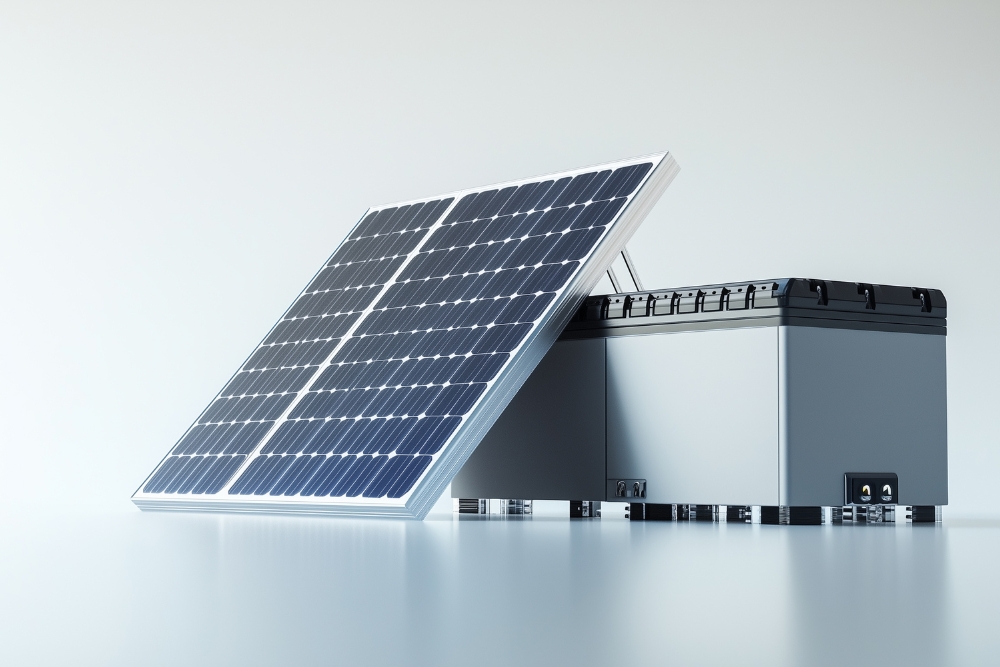
Battery storage is the part of a solar quote that generates the most excitement and, honestly, the most confusion. Salespeople love talking about energy independence and blackout protection. What they talk about less is whether the maths works for your specific home and usage pattern.
Here’s an honest look at what battery storage costs, what it does, and when it makes sense for Newcastle homeowners in 2026.
What a Solar Battery Actually Does
Your solar panels generate power during the day. If nobody’s home, a lot of that generation goes unused and gets exported to the grid, where your retailer pays you a feed-in tariff. In most parts of NSW right now, that rate sits somewhere between 3 and 8 cents per kilowatt hour.
Then in the evening, when the panels stop producing and the household comes alive, you draw from the grid at peak rates, typically 30 to 40 cents per kilowatt hour.
A battery changes that equation. It stores the excess daytime generation so you can use it at night instead of buying expensive grid power. The wider the gap between your feed-in rate and your peak tariff, the better the financial case for storage.
What Does Battery Storage Cost in 2026?
Prices have come down significantly over the past few years, and that trend has continued into 2026. A fully installed battery system for a typical Newcastle home currently sits somewhere in the range of $8,000 to $15,000 depending on capacity, brand and installation complexity.
Popular options available through local installers include the Tesla Powerwall 3 and systems from LG Chem. Aztech Solar, who install across Newcastle, Lake Macquarie and the Hunter Valley, supply and install several of these, and can walk you through the capacity options that suit different household sizes.
The NSW government’s Peak Demand Reduction Scheme (PDRS) also provides rebates for eligible battery installations, which can reduce the upfront cost. Rebate amounts change periodically, so confirm current figures with your installer when you’re getting quotes.

When Battery Storage Makes Clear Financial Sense
Battery storage earns its keep fastest in specific situations. It’s not right for everyone, and a good installer will tell you that honestly. Here’s where the case is strongest:
- Your household draws heavily from the grid between 5pm and 10pm. If that’s when your electricity use peaks, a battery covers exactly that window.
- Your feed-in tariff is low. If you’re getting 4 or 5 cents per kilowatt hour for exported power, storing it and using it yourself at 35 cents is a much better return.
- You’ve had blackouts and want backup capability. Some batteries, including the Powerwall 3, can operate as backup during grid outages when configured correctly.
- You’re adding an electric vehicle. EV charging after dark is a significant load, and a battery can cover it from stored solar rather than grid power.
- You’re future proofing. Adding battery storage to a new solar install is cheaper than retrofitting it later.
When You Can Probably Wait
Battery storage doesn’t make sense for every household right now, and there’s no shame in that.
If your household uses most of its power during the day, such as retirees at home, people working from home, or homes with pool pumps running on a timer, you’re already consuming much of your solar generation directly. There’s less excess to store and therefore less value in a battery.
If your budget is tight, a well-designed solar-only system will still cut your electricity bills substantially. Many good installers in Newcastle will design your system to be battery-ready, meaning the inverter and wiring are set up so storage can be added later without a full reinstall. It’s worth asking for that specifically when you’re comparing quotes.
What to Ask When You’re Getting Quotes
If battery storage is on your mind, push your installer on a few specifics before you commit:
- What is the usable capacity of this battery versus the advertised capacity? Most batteries can’t be fully drained to zero without affecting lifespan, so the usable figure is what matters.
- What is the expected cycle life? Better batteries are rated for 6,000 cycles or more, which translates to well over a decade of daily charging and discharging.
- Does this battery provide backup power during a blackout, and is that included in the standard install or an additional cost?
- What monitoring does it come with, and can I see battery state of charge and daily performance from my phone?
These questions separate a well-considered recommendation from a product push.
The Bottom Line
For many Newcastle households in 2026, battery storage is worth it. Prices are more accessible than they’ve ever been, the NSW rebate scheme helps, and the gap between feed-in rates and peak tariffs makes the financial case real.
But it’s not a blanket yes for every home. The best way to find out is to have an installer look at your actual usage data, not just your bill total, and model what a battery would contribute for your specific patterns. Get 3 free quotes from accredited installers in Newcastle and the Hunter Valley. Request yours here.