

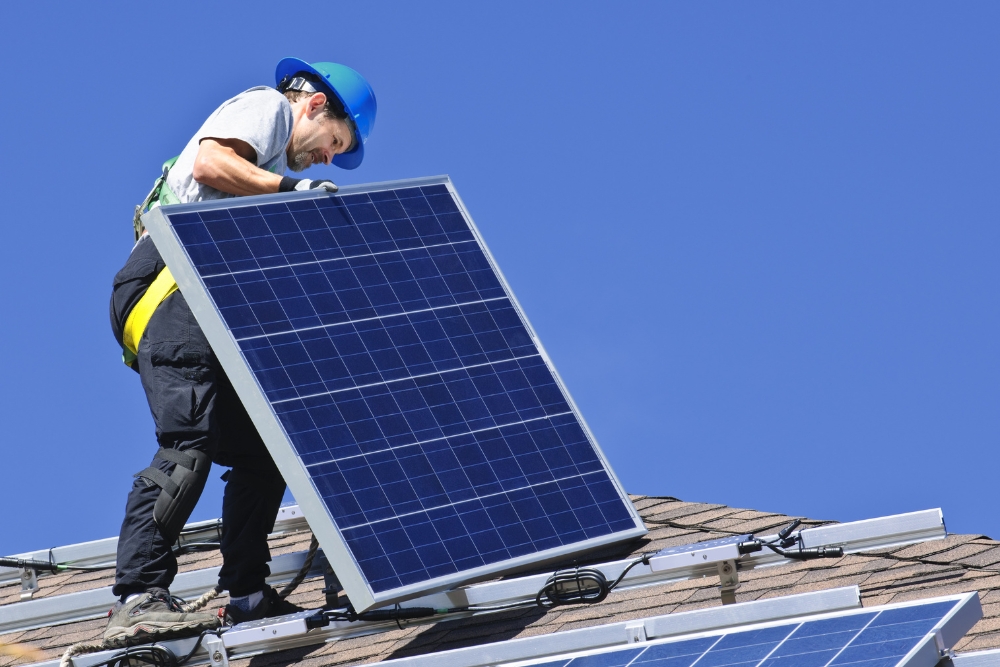
Going solar is a big decision. For most Newcastle households it’s an $8,000 to $15,000 investment, and the quality of the installer determines whether that system pays for itself in four years or underperforms for a decade. The problem is that the solar industry has had its share of operators who sell hard, install cheaply and are difficult to reach when something goes wrong.
So, before you sign anything, here’s what’s worth checking.
SAA Accreditation Is Not Optional
Solar Accreditation Australia (SAA) is now the body responsible for accrediting solar installers and designers in Australia, following the handover from the Clean Energy Council. Only an SAA-accredited installer can apply the federal government rebate, the Small-scale Technology Certificate (STC) discount, on your behalf. If your installer isn’t accredited, you lose the rebate and pay the full system price.
Ask for their accreditation number and verify it directly at the SAA installer database. It takes about 30 seconds. Any reputable installer will have no issue providing it.
Beyond the rebate, SAA accreditation tells you the person on your roof has been trained to do the job safely. That matters when the job involves your electrical switchboard, your roof structure and a system that will be running for 25 years.
Ask About the Workmanship Warranty, Not Just the Product Warranty
Solar panels typically come with a 25-year performance warranty from the manufacturer. But that warranty covers the panel itself, not how it was installed. If the mounting brackets corrode, the cabling is done sloppily, or the inverter is wired incorrectly, that’s on the installer, not the manufacturer.
The workmanship warranty is what you’re looking for. Industry minimum is around 5 years. Some local Newcastle installers go well above that.
Aztech Solar, for example, backs their installations with a 12-year workmanship warranty. That’s well above the industry norm and it tells you something about how confident they are in the quality of their work. When you’re comparing quotes, ask each installer directly: what does your workmanship warranty cover, and for how long?

Insist on an Onsite Inspection Before They Quote
Any quote based entirely on satellite imagery is an estimate at best. Roof pitch, shading from trees or neighbouring structures, the age of your switchboard, conduit paths, where the inverter will physically sit, none of these can be properly assessed from Google Maps.
An onsite inspection catches problems before they become your problem. A roof that needs reinforcement, a switchboard that needs upgrading, a tree that will shade panels for three hours a day in winter. These things change the design, the cost and the system’s performance significantly.
Reputable installers in Newcastle will come to you at no cost for an assessment. If one is quoting you remotely and pushing for a commitment, that’s worth noting.
Check Their Reviews, But Look for Patterns
A 4.8 average across 300 reviews tells you more than a 5.0 from 11. Look at the volume of reviews, how recent they are and what customers consistently say or don’t say.
Watch for recurring complaints about poor communication after installation, systems that didn’t produce what was promised, or difficulty getting someone to respond when something went wrong. One negative review about a delayed installation is normal. Five reviews mentioning the same post-installation silence is a pattern.
Also check where the reviews come from. Google is the main one. Solar Quotes is worth looking at too, as that platform tends to attract more detailed, considered feedback from homeowners who’ve done their research.
Find Out Who Is Actually Doing the Installation
Some solar companies are primarily sales operations. They take the quote, then subcontract the installation to whoever is available. That’s not automatically a problem, but you should know about it.
Ask: are the installers your direct employees? Are they SAA accredited? How long have they been working with you? A company with in-house electricians and long-term installation teams has more skin in the game when it comes to doing the job properly.
Get Three Quotes and Compare Them Side by Side
System designs vary more than most people expect. One installer might propose 16 panels on one roof face. Another might propose 20 on two faces with a slightly smaller inverter. The first might use a string inverter, the second microinverters. The warranties, brands, performance estimates and prices all differ.
You can’t make a good decision from a single quote. Three quotes give you a real picture of what the market looks like for your specific home and usage. That’s what we help with at Solar Quotation. We connect Newcastle and Hunter Valley homeowners with three accredited local installers so you can compare properly and choose based on value, not just price. Request your free quotes here.